Tuesday, February 15, 2011

US-1

Unit Summary 1

                This past unit we learned a lot of concepts that showed us how some of the earliest structures had great effects on our world today. We touched based on buildings, spaces, objects and places. More concepts are stacks, circles, grouping, and how these were applied to structures. It also showed us why these were built the way they were and how it still exist in our world today. There are many examples to express buildings, spaces, objects, and places. Almost everything you look at in this world today can be related back to one or more of these. One good example of buildings is the structures we use for shelter. Spaces are the spaces we around us like landscape or the space inside of buildings that we use for different reasons. Objects are the things that are present in the spaces or buildings that we are in. Objects are everywhere along with space. Places are those areas where space, buildings, and objects are held. These four concepts are the symbols we refer to with how the world is lived and the things that are on the world for living organisms.  Other concepts that we learned this unit were stacking, grouping, and circles. Stonehenge was a good example of circles because of the way it was designed. The circles were formed to show how the earth revolved with the sunrise and sunset. Stacking is another concept that is shown well through buildings with columns. Columns are a form of ways to stack layers for buildings. The coliseum is a good example because they figured out a way to stack layers to make a valley like structure for events. It was easier to build up then have to find valleys already in the earth. They stacked layers upon layers for seats and other amentias for the coliseum. Columns also did a good job for stacking because it allowed for support to stack upon another layer, but it also gave it an elegant look as well. A good example of grouping is the Forum Romanum. This is a good example because the forum is where a lot of people will gather. To put the important things in the middle and group buildings around that is a good way to gather a lot of traffic flow. Another good example is parking garages. Parking  garages are in the middle of heavily populated areas to park. They group buildings around the garage so that it is convenient. Routes and proximity is another concept we talked about. Rome was a good example of how routes were used. They had a barrier around the land for Rome. Within the walls there were roads at an axis of north, south, east, and west. This was to make it easy to travel within the city. They also put the coliseum close to the city but on the outside because it was so big and important at this time. Form, axis, and materials are also important with all these concepts. The shapes and forms of the buildings are important to how it looks and the purpose of the building. Columns are giving it form as well as the circles that are inside of it to form a focal point. Materials are important because of what the building is made out of. Tile, stone, marble, glass, all of these can tell you what the purpose of the building was and what point the materials are trying to tell you of how the building is perceived to people. And last but not least axis. Axis is pretty important because it almost acts are direction to buildings.  It is almost like a road within to show you where to walk and guides you to certain areas to go. There are a lot of ideas within this unit that are the foundation for how we perceive the world today. Just because it is old doesn’t mean it won’t pass on throughout the years.


Shows grouping of important buildings.


Sunday, February 13, 2011

RR 4 week of Feb. 7-11

Narthex: Hagia Sophia
Glass/Stone/Frozen Music/circles/stacking/axis/arches
·         Shows good use of how stacking by columns building from one floor to the next then to the circle on top with glass all over
·         The glass was meant for the feeling of the dome floating
·         Entire inside is stone, marble, and gold shows the expression on faith in a sense that is a powerful thing
·         It is located in Constantinople and is one of the greatest building in Western hemisphere
·         The dome on top represent a circle very well along with frozen music, It echoes and is made for when speaking to bounce off and come back louder
·         It has a neo classical look as well for the dome area, it is symmetrical on both sides with a atrium connected to the end on one side
·         Axis is represented as well in the middle of the dome there’s a circle and it leads you to an alter on one side and to the atrium on the other and doors to the other two sides. Good use of axis using  a circle as a focal point
·         The circle is enclosed into a square which the main center piece with arches on the four corners of the circle to make the square
I thought that the Hagia Sophia was a great place because it demonstrates a lot of the concepts we talk about it class on a daily basis. It has good representation of circles and how circles are used as the circle of axis and even squares with arches on the side of the circles to form the square. Which I think the arches point the four ways of the axis. Circles and columns are also in this because of the dome. The columns are stacking the layers of the building leading up to the dome on top. I feel if this was more than just a place of worship frozen music would be a great example. This could shape how music was made and played because of the structure and how sound can pass through. It is good for voices and it is a place of worship and a massive place. The dome carries the sounds and echoes them making this place a good area for voices and the music that comes with worship.  

BP 5 Flickr Picture/Poem

A space of value with sweet toned skies
Skies that resemble jazz like feeling
A space of many textures with abnormal emotion
Landscape showing rhythm with beats so cool
A beautiful antique structure showing loneliness and heartache  
Loneliness of the trumpets overpowering the rest of the jazz ensemble
Layers stacked upon layers giving overlooking harmony
A tempo so soft and peace
LOOK! What can you hear?

Sunday, February 6, 2011

RR 3 Week of Jan. 31- Feb.4

Shaft Tomb at El Arenal
Good example of circles, stacks, and groups.
·         Was the chieftains and their families symbolic center of the society
·         Largest of the shaft tombs between 300 bce and 200 bce
·         Have been destroyed now
·         Circular complex with smaller circular complexes around the main tomb
·         Shaft tombs are about 8 meters deep
·         Shafts are center of the mounds and at the bottom open into a mound
·         Circles were found in groups of two or three
·         Later after 300 BCE came less important and were just huge surface circles with ball courts

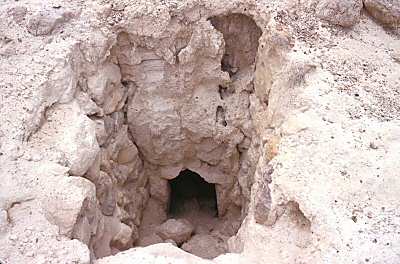
I felt as though the shaft tombs showed good examples of circles, stacks, and groups because this is what they are. What is a better example than structures that are exactly this?  From the pictures it looks like the society of people lived relatively close to the tombs. The tombs were in a circle with three circling one big tomb. The thing that caught my attention the most was the shaft in the middle of the tomb. It was almost as if it was a stick pointing to the tombs.  The stacking is represented by the layers of earth that get smaller as it goes up with steps through the middle. It is hard to see these today because most have been destroyed or dug up for artifacts. Grouping was also good example because they grouped the circles together for purpose of the deceased.
Shows a tomb inside of the circle.

BP 3 Feb. 4 field trip

I believe the MHRA had a good example of commodity, firmness, and delight. Although the music people had a better score in delight I feel as though the MHRA did a good job in firmness and commodity. The MHRA had good light for the entrance to with the huge windows surrounding the foyer part of the building. The lighting was natural from shining in from the top which gave it a nice appeal. The materials in the building were not as great like the music people but served purpose and looked pleasing for the human eye for people that are not design majors. The materials in the MHRA were tile floors, with granite or stone imbedded into the tile in certain areas to form a circle that pointed to doors on the opposite side almost like the North Star helping find your way. There was metal that went up the windows almost as columns for structure. The huge glass structures in my opinion are there for help in exiting and entering. The axis always leads you to a door with glass. It allows light to come in as if there were no light in the building you could see some light out the glass to get out. The columns in the foyer of the MHRA were hollow to serve purpose for security fobs but they did their purpose to show a nice elegant feel to the building on the inside. It also uses different color walls to contrast the main lobby into a smaller lobby with a stone like grey. Out of ten I would give the MHRA a 5 in a designers view but in normal students it would serve as a very nice building. The commodity for the MHRA in my opinion scored fairly high. Its function is to serve as a place of learning as well as offices for research. The space was done well with classes near the rear part of the building and the offices at the big foyer opening to give those offices a more elegant feel. Inside the office it was two times nicer than the rest of the building because it serves more of a purpose for business elegance. They had granite table tops and stone in the walls along with carpet. The tiles in the MHRA show axis well I thought too. The roof almost matched the floor tiles and in a way was a road to show you what way to go. The MHRA I thought did a pretty good job as well to show an important structure in our university. It’s on the corner of the busiest street in our campus and the big window entrance is on the corner with steps as if it’s important. Going out of the building doesn’t really lead you into anything really important by the way the entrance was set but it does well with the four corners on the street to lead you up those stairs. The EUC is close by and registration building which makes up for it some. I think the MHRA shows in a good way of where our campus is going. Were growing a lot and putting up a lot of new structures. I think it is showing that we are growing to be a big school and that we are not going to have education buildings but offices that represent what that education in the building is. The MHRA is a building for research and the offices in there are set for that purpose as well. Our campus is growing fast and this building shows by its looks that this is a serious place for education.

Sunday, January 30, 2011

RR 2 Pages for week of Jan 24-28

From all of the reading this past week a couple of things really caught my attention. From the Ching book the rock cut tombs were very interesting to me. I think it is amazing in how you can carve almost a city looking structure into the side of a mountain and hollow rooms and things of that nature without any materials other than what the mountain was. It seems to be very difficult and it looks great. I like how they stacked rooms and windows above each other to stack a city into a mountain. Although it was a tomb the outside of it looks more elegant to look as though people had lived there. The details of columns and windows are so fascinating and done with great care to show off the purpose they wanted to pursue with it. The tombs were inside of the carved out structure and were very deep below openings almost like rooms.
                Another interesting reading was about the theater in the Roth book. What I like about the theater was that today this is how theaters are. It is cool to think that something so simple in reality was kept for so many years. I think this structure is especially appealing to me because it stack layers after layers but to serve purpose for multiple people to sit and enjoy a show or whatever is going on. They grouped seats but in a way that it stacked to save room in a sense because the higher seats it doesn’t matter about space up high. If you were to build seats like they are now but where they didn’t stack but grouped close on a lower level it would be infinite to try and arrange them in a way to make it able to see and save room from the theater being miles long. Another thing about the theater is that it wraps around to a focal point. Its main purpose and view is a circular area where the activity is going on.  Its purpose is served well of trying to fit many people for one section.

BP 2 Ten Ideas on UNCG

Ten Ideas on UNCG
A picture showing the outline of UNCG and how we used the space provided to space out and build things in places.
Space- Space is applied to UNCG in my opinion by how we use area that is designated to building the school on.  We have only a certain amount of space that we can build on and I think it is applied to how we manage our space to create more space so things are not crowded. Space is also generated by how we obtain areas spaced out for certain activities, the sports fields and social areas for example.
Power- Power is applied to UNCG by showing that our school is a place that really can make an impact on students. The entrance to UNCG with the big brick walls on both sides and trees along the roads leading you show the school is a powerful environment to learn in. Power is also shown with the neo classical buildings we have with steps to go up to the building with columns to show it has a masculine powerful structure and importance.
Experience- Experience is shown with our numerous memorabilia’s around campus. Showing that we have been here for many, many years and showing where we have came from to the place that we are today. The plaques and statues around show that we have the experience of being an educating institution.  Back then our dorms were made out of the materials that they had then. Our dorms now still show that a little but renovated to the show the experience of today’s world and the materials we have now.
Beliefs- Belief is shown through our school because of what it is. It is a place to educate. The believe that people should be educated is shown in every building on campus. We also have places of worship either on the campus or right outside of the campus to show that we do believe in a god or some kind of supernatural that has a meaning to us.
Surface- Surface is shown through everything on campus. The ground we walk and build on. The texture of buildings, walk ways, and places we sit for class. Surface is shown just by looking at UNCG. The entire place is a surface. Everything on campus has its own unique surface in a way to show what kind of place it is. Education buildings have more elegance to them than the place we live in or eat in.
Technology- UNCG represents technology with the illusions of columns we have.  The EUC shows this well on the front looking like a hangover in front of the doors when really they are columns. Technology also shows with how we build and design the buildings. Today’s technology can amount to different styles and additions to buildings that people back in older years didn’t have the advantage of using to carve or design certain things.
Site- Site is expressed through the space on which areas of buildings are on. The site on how it sits is important. The taller dorms show site well because the site where they were built have many trees and is founded on ditch, giving the need to build them vertically. This go’s for all buildings. They are built by what site they are given and the terrain.
Order- Order is shown with how we organized our buildings. The order of campus is by major. It goes from art area to communication areas to nursing to science. There is an order of where to have things to benefit other buildings. Science and nursing go together and to build that close is an order to help relate to things together. Living is in an order by upper classmen to underclassmen. Also to sports needing areas with more room and going to smaller areas for sports that don’t need as much room. Order is shown through many aspects on how our campus is set up.  
Scale- Scale is shown by how our buildings are to scale. They are built to hold many people for a place meant for many people. The EUC is a main place for people in campus so it is built to scale to obtain more people to be in there at one time. The art museum is built to scale to hold art that may have size but not to hold many people because of the fact that many people at one time will not be in this building.

A Diagram (Blueprint) to show how things are managed and built to show how much room for each place needed.

Precedent- Is related to UNCG by the way the campus was built and designed the way it was. It was to me designed to have a intellectual elegant design to show that education is important and a good place to spend alot of time at to learn and become more intellectual. UNCG was put up the way it was to promote learning in a positive way by how the buildings are designed. They are nice and taken care of.